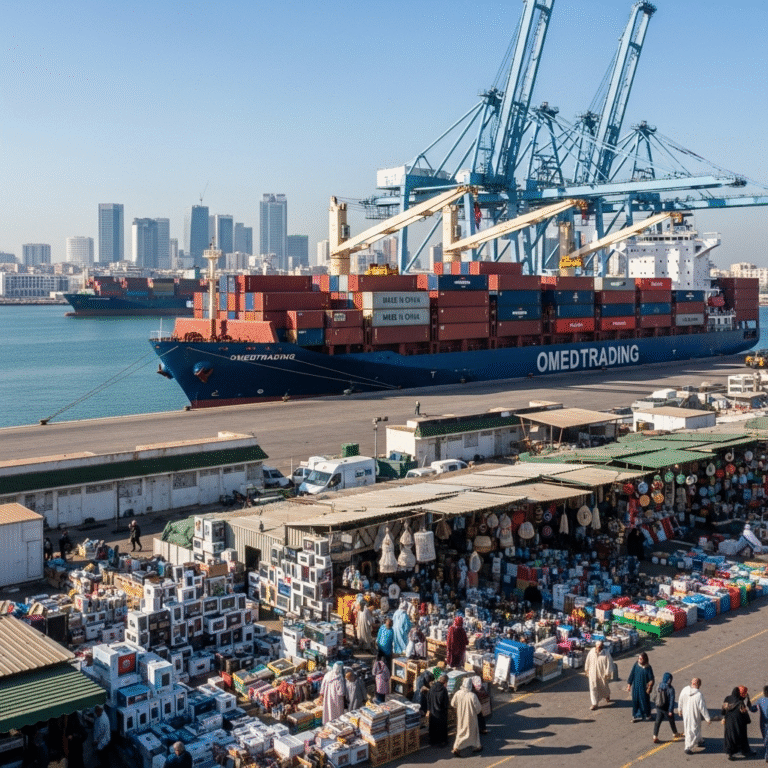
The Complete Guide to Navigating China’s Manufacturing Landscape Successfully
Introduction: China as Your Manufacturing Partner
China has maintained its position as the world’s leading manufacturing hub for decades, and for good reason. The country offers an unmatched combination of manufacturing capacity, skilled workforce, established infrastructure, and competitive pricing. However, successfully sourcing from China requires much more than finding a factory and placing an order.
At Omed Trading Co. Ltd, we’ve spent years helping international businesses navigate the complexities of Chinese manufacturing. Our experience has taught us that success comes from understanding not just the manufacturing process, but the cultural, business, and logistical landscape that surrounds it. This comprehensive guide shares the insights we’ve gained through countless successful partnerships.
Why China Remains the Manufacturing Center of the World
Unparalleled Manufacturing Ecosystem
China’s manufacturing strength isn’t just about individual factories—it’s about the complete ecosystem that supports production. Raw materials, component suppliers, specialized machinery, skilled workers, and logistics infrastructure all exist in close proximity. This clustering effect means faster production, easier problem-solving, and more flexibility than you’ll find in most other locations.
Consider electronics manufacturing as an example. In Shenzhen and surrounding areas, you’ll find everything from semiconductor suppliers to plastic molding specialists, from circuit board manufacturers to assembly facilities, all within a relatively small geographic area. This proximity enables rapid prototyping, quick adjustments, and efficient scaling that would be impossible in more dispersed manufacturing environments.
Manufacturing Diversity and Specialization
Whatever your product category, China likely has manufacturers specializing in it. From textiles to electronics, furniture to machinery, toys to industrial equipment, specialized manufacturing clusters have developed across the country. These regional specializations mean you’re not just finding a factory that can make your product—you’re finding factories that have perfected your exact product category over decades.
Guangdong province dominates electronics and consumer goods. Zhejiang specializes in small commodities and textiles. Jiangsu focuses on chemicals and machinery. This regional specialization creates centers of excellence where knowledge, skills, and innovation concentrate.
Continuous Innovation and Improvement
Modern Chinese manufacturers aren’t just production facilities—many are innovation centers developing new materials, processes, and products. The notion that China only copies Western designs is outdated and inaccurate. Today’s Chinese manufacturers often lead in automation, efficiency, and even product innovation.
This commitment to improvement benefits international buyers. The manufacturers we partner with at Omed Trading regularly invest in new equipment, training, and quality systems. They understand that maintaining competitiveness requires constant evolution, which means better products and processes for our clients.
Understanding the Chinese Business Environment
Cultural Considerations in Business Relationships
Successful sourcing from China requires understanding Chinese business culture. Relationships matter enormously. The concept of “guanxi” (relationships or connections) isn’t just a cultural curiosity—it’s fundamental to how business operates. Building trust and maintaining long-term relationships often matter more than individual transactions.
This cultural reality highlights the value of working with experienced intermediaries like Omed Trading. We’ve invested years in building these relationships, understanding the cultural nuances, and establishing the trust that makes business flow smoothly. Our clients benefit from these established connections without needing to navigate cultural differences themselves.
Communication Strategies That Work
Language barriers represent a practical challenge in China sourcing. While many manufacturers have English-speaking staff, technical specifications, quality standards, and expectations can still get lost in translation. Miscommunication about materials, dimensions, colors, or processes can lead to expensive mistakes.
Our bilingual team ensures clear communication at every stage. We don’t just translate words—we translate concepts, ensuring that your specifications are understood exactly as intended. We verify understanding through detailed documentation, samples, and regular check-ins throughout production.
Payment Terms and Financial Considerations
Payment terms in Chinese manufacturing typically differ from Western business practices. Most factories require deposits before beginning production, with balance due before shipment. Understanding these terms, negotiating appropriate protections, and managing payment timing requires experience.
We help clients navigate these financial aspects safely. We structure payment terms that protect both buyer and manufacturer, recommend appropriate payment methods, and ensure funds are released at appropriate production milestones. This balanced approach builds trust while protecting our clients’ interests.
The Omed Trading Sourcing Process
Step One: Understanding Your Needs
Every successful sourcing relationship begins with thoroughly understanding what you need. This goes beyond basic product specifications. We need to understand your quality expectations, target price points, volume requirements, timeline constraints, and growth plans.
During initial consultations, we ask detailed questions about your product, market, and goals. Are you launching a new product or optimizing an existing supply chain? Do you need rapid prototyping capabilities or stable long-term production? Are you price-sensitive or quality-focused? Understanding these nuances allows us to match you with appropriate manufacturers.
Step Two: Manufacturer Selection and Vetting
Based on your requirements, we identify potential manufacturing partners from our established network. We don’t just match product categories—we consider production capacity, quality systems, minimum order quantities, lead times, and cultural fit.
Our vetting process is thorough. We conduct facility inspections, verify certifications, check references, and review past performance. We assess manufacturing capabilities, quality control systems, and financial stability. This due diligence eliminates unsuitable partners before you invest time in discussions.
Step Three: Negotiation and Agreement
Once we identify appropriate manufacturers, we negotiate terms on your behalf. Our experience and relationships give us negotiating advantages while our understanding of your needs ensures agreements serve your interests.
We negotiate more than just price. We establish clear quality standards, define inspection procedures, agree on lead times, structure payment terms, and determine shipping arrangements. These detailed agreements prevent misunderstandings and provide clear frameworks if issues arise.
Step Four: Production Monitoring and Quality Control
Production monitoring separates successful sourcing relationships from disappointing ones. We maintain regular contact with manufacturers throughout production, monitoring progress and addressing issues as they emerge.
Our quality control process includes multiple checkpoints. We verify materials before production begins, conduct in-process inspections to catch issues early, and perform comprehensive final inspections before shipment approval. This multi-stage approach ensures products meet your specifications.
Step Five: Logistics and Delivery
Getting your products from factory to your location efficiently and cost-effectively requires logistics expertise. We coordinate shipping, handle documentation, manage customs clearance, and track deliveries until products reach your specified destination.
Our established relationships with freight forwarders and logistics providers mean competitive rates and reliable service. We handle the complexity so you can focus on your business rather than tracking shipments and managing documentation.
Common Pitfalls and How We Help You Avoid Them
The Low-Price Trap
Many businesses begin their China sourcing journey focused primarily on price. While cost savings are certainly a benefit of Chinese manufacturing, focusing exclusively on the lowest price often leads to problems. Unusually low quotes usually indicate compromised quality, unsuitable materials, or manufacturers who can’t deliver as promised.
We help clients understand fair market pricing for their products. We know when quotes are reasonable and when they’re too good to be true. Our goal is optimal value—the best combination of quality, reliability, and price—rather than simply the lowest cost.
Quality Inconsistency
A common complaint about Chinese manufacturing is quality inconsistency. Samples look perfect but production runs disappoint. This typically happens when quality control is inadequate or when manufacturers make unauthorized changes to save costs.
Our rigorous inspection process catches these issues. We verify that production units match approved samples, that specified materials are used, and that quality remains consistent throughout production runs. We’re your advocate for quality, ensuring manufacturers maintain standards from first piece to last.
Intellectual Property Concerns
Intellectual property protection in China has improved significantly, but concerns remain legitimate. Sharing designs, specifications, or innovative concepts with manufacturers requires appropriate precautions.
We help clients protect their intellectual property through NDAs, careful selection of reputable manufacturers, and strategic information sharing. While no protection is absolute, proper precautions dramatically reduce risks.
Communication Breakdowns
Miscommunication causes countless problems in international sourcing. Specifications misunderstood, expectations unclear, changes not communicated—these communication failures lead to wrong products, delays, and disputes.
Our bilingual team prevents these problems. We ensure clear communication in both directions, verify understanding through detailed documentation, and maintain regular contact throughout the production process. When questions arise, we get clear answers quickly.
Building Long-Term Sourcing Relationships
From Transactions to Partnerships
While our first project together might be transactional, our goal is always building long-term partnerships. Long-term relationships benefit everyone—you get consistent quality and reliable supply, manufacturers get predictable business, and we maintain valuable partnerships that strengthen our network.
Long-term relationships also unlock additional benefits. Manufacturers offer better terms to reliable partners. Communication improves as everyone understands expectations. Problem-resolution becomes faster when trust is established. Production becomes more efficient as manufacturers learn your preferences.
Continuous Improvement and Optimization
Successful sourcing relationships don’t remain static. We continuously look for optimization opportunities—process improvements that reduce costs, quality enhancements that improve products, or supply chain adjustments that accelerate delivery.
Regular reviews with clients and manufacturers identify these opportunities. Maybe production volumes have grown enough to negotiate better terms. Perhaps new manufacturing technologies could improve quality or reduce costs. Ongoing attention to optimization ensures you continue receiving maximum value.
Scaling Your Operations
As your business grows, your sourcing needs evolve. Initial orders might be small, but success requires the ability to scale significantly. We help clients plan for growth, ensuring manufacturing partners can accommodate increased volumes without compromising quality or lead times.
Our network includes manufacturers of various sizes, from specialized facilities perfect for smaller orders to large operations capable of massive production runs. As you grow, we can transition you to appropriate partners or help existing partners scale their capacity.
The Omed Trading Difference
Experience You Can Trust
Our experience in Chinese manufacturing comes from years of hands-on operations. We’ve seen what works and what doesn’t. We’ve learned from mistakes (ours and others’), celebrated successes, and continuously refined our approach. This experience directly benefits our clients.
Under the leadership of Hatim Kaouakib and the strategic guidance of Omar from the OLMA Group, Omed Trading combines operational excellence with strategic vision. We understand both the details that make individual projects successful and the trends shaping the future of global manufacturing.
Your Success Is Our Success
Our business model aligns our interests with yours. We succeed when you succeed. This alignment means we’re motivated to find optimal solutions rather than quick fixes, to build sustainable relationships rather than maximize short-term gains, and to solve problems proactively rather than reactively.
We measure success not by the number of transactions we complete but by the long-term value we create for partners. Many of our client relationships span years, growing as their businesses grow, which validates our approach and commitment to their success.
Conclusion: Your Path to Manufacturing Success
Successfully sourcing from Chinese manufacturers offers tremendous opportunities for businesses of all sizes. The combination of manufacturing expertise, competitive pricing, and production flexibility available in China is unmatched globally. However, realizing these benefits requires navigation of complex business, cultural, and logistical landscapes.
Omed Trading Co. Ltd exists to make this navigation smooth, reliable, and successful. Our mission is to provide professional sourcing, trading, and logistics solutions that bridge international buyers with trusted Chinese manufacturers. We bring the expertise, relationships, and commitment needed to transform sourcing from a challenge into a competitive advantage.
Whether you’re just beginning to explore Chinese manufacturing or looking to optimize existing supply chains, we’re here to help. Our vision of creating a transparent, reliable, and connected world of trade means businesses of all sizes can access the same opportunities to grow globally. Your success in Chinese manufacturing doesn’t require you to become an expert in international trade—it requires partnering with those who already are.